プンチョンウナギ、どれほど美味しいか? in 全北特別自治道 高昌郡 · schedule その他 · distance 7km · 3 stops · highlights Gochang Sin Jae-hyo Old House, Gochang Eupseong Fortress, Ujin G…

コチャンパンソリ博物館は、パンソリの理論家であり改作者、後援者であったトンリ・シンジェヒョとチンチェソン、キムソヒなど多くの名唱を記念し、パンソリの伝統を継承発展させるためにトンリ・シンジェヒョ先生の旧宅の場所に設立されました。
このコースは1日旅程のサンプルです。そのまま保存するか、AI日程に拡張できます。
Sin Jae-hyo Old House was the home of Sin Jae-hyo (1812–1884), a theorist of pansori and the person who consolidated pansori. It is estimated to have been built in the first year of Cheoljong (1850) and is known to have been rebuilt by his son in Gwangmu 3 (1899). Originally a modest thatched-roof sarangchae (men's quarters), it was used as an annex of the Gochang police station before being designated a national intangible cultural heritage site, after which the state took over management and restored its original appearance. The building has a '一'-shaped floor plan with six bays at the front and two bays at the side, featuring a thatched roof. The interior comprises one kitchen, two rooms, one daecheong (main hall), and one integrated room. A half-bay wooden porch (toemaru) is installed along the front's five bays excluding the kitchen. The double-leaf folding door between the kitchen and the rooms and the absence of doors in the rooms on both sides of the daecheong are unique architectural features, making it historically significant as Sin Jae-hyo’s birthplace.
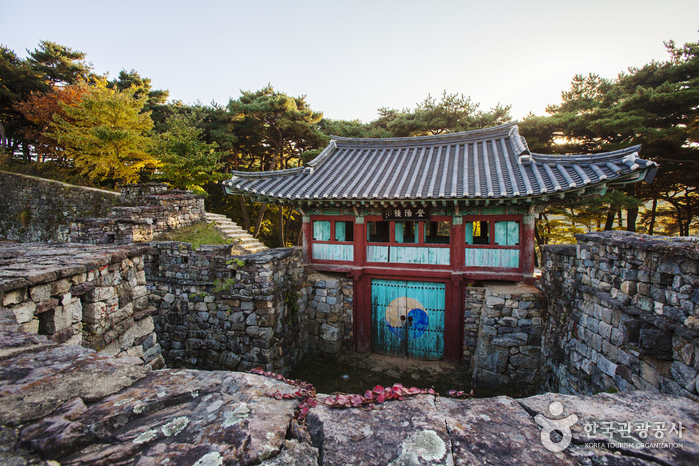
There are various theories about the construction date of Gochang Eupseong Fortress, but inscriptions found during repair of the government office building, historical documents, and characters engraved on fortress stones indicate construction was divided by section and shared among 19 counties and prefectures of Jeolla Left and Right provinces from the 32nd year of King Sejong of Joseon (1450) to the 1st year of Danjong (1453). Among the inscriptions are those of Mujang Simeon and Mujang Jong, and on the eastern gate bastion wall, the inscription "Gye-yu-so Chuk Gam Dong Song Ji Min (癸酉所築監董宋芝玟)" remains, which can be interpreted as showing that the fortress was built in Gye-yu year and that Mujang-hyeon participated in construction. Records about Gochang Eupseong first appear in Sinjeung Dongguk Yeoji Seungram (新增東國輿地勝覽) under Gochang Hyeon fortress section. Though published in the 25th year of King Jungjong (1530), the name "Sinjeung" only appears in the appendix, so the fortress construction date compresses to before the 17th year of King Seongjong (1484) based on the second revision by Kim Jong-jik and others mandated by the king. Mujang-hyeon was formed in the 17th year of King Taejong (1417) by merging Musong-hyeon and Jangsa-hyeon, so the Gye-yu year of construction must be after 1417, confirming Gochang Eupseong was built in 1453, a Gye-yu year. According to legend, stepping on stones of Gochang Eupseong while wearing a stone on your head grants longevity without illness and arrival at the Gate of Paradise after death, which leads to an annual fortress-walking event. The ritual is believed effective only during the leap month when gates to the afterlife open, with the leap month of March regarded as best. Especially significant are the dates of the 16th, 17th, and 20th days, believed to be when the gates open. Walking one lap cures leg ailments, two laps bring health and longevity, and three laps ensure ascension to paradise. Participants must carry a palm-sized stone on their heads and complete three laps, then leave the stones in designated areas. Emphasis on the leap March likely serves to firm the fortress after winter swelling, and carrying stones adds weight to strengthen the structure.
'Pungcheon eel' refers not to a place name but to locations where freshwater and seawater meet in rivers connected to the West Sea or South Sea, where tidal ranges are large. These places are often called Pungcheon (風川) because waves swirl and fierce winds arise. Gochang's 'Gaetbeol Pungcheon eel' is the most famous Pungcheon spot in Jeollado, where eels are raised in tidal flats meeting sea and freshwater without feeding. This results in flesh that is notably chewy compared to other eels. The plump and mild eel dipped in sweet and salty soy sauce has a taste that clings to the tongue, exemplifying true savory flavor.
コース後に休みやすい宿を集めました
会員登録して自分のチャンネルも一緒に紹介してもらう
(会員になると、マイページで設定した Instagram・YouTube・ブログのリンクが、あなたのコメントと一緒に表示されます。)
“「弘大近くに滞在して、夜のカフェ巡りをしました。街の夜景も雰囲気も最高でした。」”
ゲストとして投稿したコメントには、SNSリンクやプロフィールカードは表示されません。
この場所についてのちょっとしたコツや感想をシェアしてください。
ゲストとして、気軽にひとことコメントを残すこともできます。
写真の添付はログイン後に利用できます。
まだレビューがありません。最初の感想を投稿してみましょう!