
モアク山の麓にある四大宗教聖地を巡る in 全北特別自治道 キム・ジェシ · schedule その他 · distance 17.8km · 3 stops · highlights Geumsan Church, Geumsansa Temple, Geumpyeong Reservoir
キムジェとワンジュの境界に位置するモアク山は、母の温かい懐のようにすべてを包み込んでいる。モアク山の麓には仏教、プロテスタント、カトリック、チュンサン教などの宗教聖地がそのまま残っている。仏教を代表するクムサンサとクイシンサ、プロテスタントのクムサン教会、カトリックのスリュ聖堂、チュンサン教のトングク薬房がそれである。宗教が異なるため、巡る際の感覚や風景もかなり異なる。宗教の偏見を取り除いて巡れば、非常に美しい旅となる。
このコースは1日旅程のサンプルです。そのまま保存するか、AI日程に拡張できます。
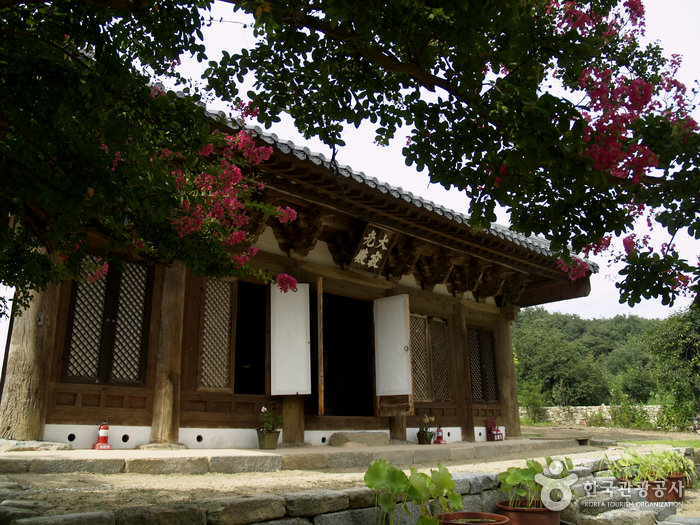
Geumsan Church is a hanok church built in 1908 by missionary Lewis Boyd Tate of the Jeonju line. According to the historical records of the Joseon Jesus Presbyterian Church, the original church was built in 1905 with five kan, but it was moved and rebuilt at its current location in 1908. Next to Geumsan Church, a new church building and parsonage were constructed in 1988. The building is five kan long in the north-south direction, with two additional kan extended eastward, forming an inverted L shape. The interior is open with a pulpit installed where the five-kan north-south section meets the two-kan east section, separating seating for men to the south and women to the east. This layout is a unique feature of early Korean church architecture, addressing traditional Korean social gender separation by providing separate worship spaces within an L-shaped building. The church harmoniously combines traditional Korean architectural styles with Western church features, serving as an important structure for studying the indigenization process of early Korean church architecture. The preservation status of each structure is good, and it is designated and conserved as a cultural asset.
Geumsansa Temple was founded during the Baekje period and has a history of over 1,400 years, keeping its Buddhist light shining to this day as a historically significant temple. It is located on the western foothills of Moaksan Mountain, which rises prominently in the Honam Plain. The temple suffered hardships such as complete destruction of all buildings and about 40 hermitages inside the mountain due to arson by Japanese troops during the Imjin War. However, many cultural properties have been established thereafter and are preserved to the present day. (Source: Geumsansa homepage)
Geumpyeong Reservoir is an agricultural irrigation reservoir located in Geumsan-ri, Geumsan-myeon, known for never drying up due to water flow from Moaksan Mountain. It is situated on the road from Geumsan-myeon office heading toward Geumsansa Temple. The area around Geumpyeong Reservoir, called Orialteo, features a wildflower complex and well-developed walking trails. The name Orialteo was given following a prophecy by Doseon, a geomancer from the late Silla period, who predicted it would become a place where ducks lay eggs. As part of the Moaksan mountain beautification project, facilities like the Geumpyeong Side Path Trail have been constructed, making it both a sightseeing spot and a resting area. The total 3.5 km Geumpyeong Side Path Trail consists of three courses (Section 1, Section 2, Section 3) and an embankment path, with a total walking time of about one hour. Section 1 includes a 1 km waterside deck road and waterside ecological forest, Section 2 a 0.8 km waterside deck road, Section 3 a 1.2 km waterside deck road and natural forest road, and the embankment path is a 0.5 km concrete paved road. A pavilion by the waterside allows visitors to rest and cool down in the shade of lush trees. The reservoir has clean water due to few pollution sources nearby and is also famous as a winter migratory bird site in Korea.
会員登録して自分のチャンネルも一緒に紹介してもらう
(会員になると、マイページで設定した Instagram・YouTube・ブログのリンクが、あなたのコメントと一緒に表示されます。)
“「弘大近くに滞在して、夜のカフェ巡りをしました。街の夜景も雰囲気も最高でした。」”
ゲストとして投稿したコメントには、SNSリンクやプロフィールカードは表示されません。
この場所についてのちょっとしたコツや感想をシェアしてください。
ゲストとして、気軽にひとことコメントを残すこともできます。
写真の添付はログイン後に利用できます。
まだレビューがありません。最初の感想を投稿してみましょう!


