金海ガラク国の王と妃が眠る場所を訪ねて in 慶尚南道 キム・ヘシ · schedule その他 · distance 2.5km · 4 stops · highlights Gimhae Gujibong, 국립김해박물관, 대성동고분박물관

金海は伽耶国の歴史が息づく伝統ある都市である。金海の象徴的な文化遺跡をたどり、静かに眠る文化遺産を訪ねる。首露王の妃である許黄玉皇后が眠る首露王妃陵から始まり、金海の代表的な遺跡である首露王陵まで巡り、伽耶の歴史を振り返ることができる。
このコースは1日旅程のサンプルです。そのまま保存するか、AI日程に拡張できます。
A small mountain peak located in Gusan-dong, Gimhae-si, designated as a Gyeongsangnam-do monument on August 6, 1983, and changed to a historic site on March 7, 2001. It is said to be the birthplace of Suro Wang, the founder of Gaya. Originally called Gusubong because it resembled a turtle's head, the flat area where the tomb of Queen Suro now lies represents the turtle's body, and the peak extending westward is thought to look like the turtle's head, hence the name. At the summit, there is a southern-style dolmen believed to date back to the 4th century BC. The dolmen has a cover stone resting on short support stones, and on it is inscribed the Gujibongseok epitaph believed to be written by the scholar Han Ho. Though Gujibong is just a low hill, it remains a sacred mountain for local people as the main stage of the birth legend of Gaya’s founder. During the Japanese colonial period, a road cut through Gujibong, severing the turtle's neck, but because of geomantic concerns, a pedestrian path was built over the road to reconnect the broken neck area.
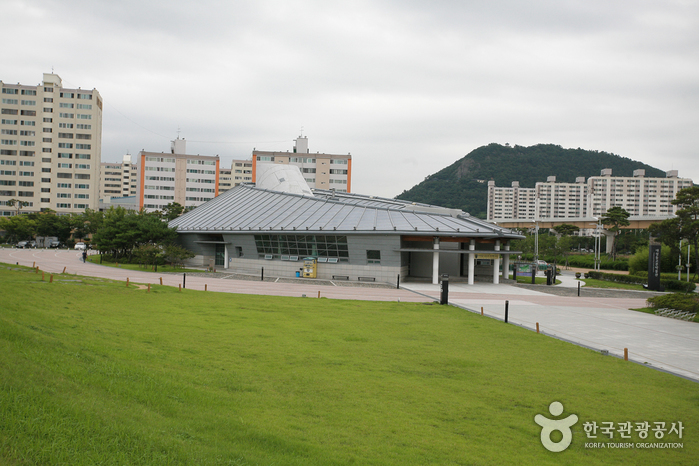
가야의 건국설화(建國說話)가 깃든 김해시 구지봉(龜旨峰) 기슭에 자리 잡은 국립김해박물관은 가야의 문화재를 집약 전시하고 있으며, 아울러 부산·경남지역의 선사시대의 문화상과 가야의 성장 기반이 된 변한(弁韓)의 문화유산을 전시하고 있다.
대성동고분군에서 4차례의 발굴조사에서 출토된 자료들을 전시하여 소개함으로써 역사 속에서 가려져 있었던 금관가야의 실체뿐만 아니라 이곳이 금관가야의 중심지라는 것을 인식하게 하는 장이다. 박물관은 지상 1층의 전시실과 지하 1층의 부속시설을 갖추고 있다. 지상 1층 3개의 전시실에는 도입의 장, 개관의 장, 고분의 장, 교류의 장, 문화의 장 5개의 전시공간을 구분하여 전시하고 있다.
The tomb of King Suro, the founder of Geumgwan Gaya, located in Seosang-dong, Gimhae-si, is designated as a historic site. It is a round-shaped mound approximately 5 meters high, with buildings such as Sungsunjeon (where the spirit tablet is enshrined), Anhwangak (for storing incense and sacrificial tools used in spring and autumn rites), Jeonsacheong, and Jegigo. There are also stone structures like the spirit monument and the merit monument. Major historic sites of Suro Royal Tomb include Sungsunjeon, Anhwangak, Nambyeong main gate (the main gate of the royal tomb), and Gujibong, which is a formation of ten turtles grouped together. King Suro ascended the throne as the founder of Garakguk in 42 AD, married Princess Heo Hwang-ok from the Indian Yautya Kingdom in 48 AD, and is the progenitor of the Gimhae Kim clan. In the 13th year of Seonjo's reign (1580), Yeongnam Governor Heo Yeop reportedly renovated the tomb into its current form. Inside the tomb are spirit tablets of King Suro and Queen Suro; spirit tablets are places where the soul of the deceased rests, referring to a portrait or document of the deceased. The tombstone in front of the tomb was erected in the 25th year of King Injo's reign (1647), and the name Sungsunjeon was bestowed by the king in the 21st year of King Gojong's reign (1884).
コース後に休みやすい宿を集めました
会員登録して自分のチャンネルも一緒に紹介してもらう
(会員になると、マイページで設定した Instagram・YouTube・ブログのリンクが、あなたのコメントと一緒に表示されます。)
“「弘大近くに滞在して、夜のカフェ巡りをしました。街の夜景も雰囲気も最高でした。」”
ゲストとして投稿したコメントには、SNSリンクやプロフィールカードは表示されません。
この場所についてのちょっとしたコツや感想をシェアしてください。
ゲストとして、気軽にひとことコメントを残すこともできます。
写真の添付はログイン後に利用できます。
まだレビューがありません。最初の感想を投稿してみましょう!