
ダサンが愛した憩いの場 in 全羅南道 江津郡 · schedule その他 · distance 6.61km · 3 stops · highlights Geumneung Gyeongpodae, Muwisa Temple, Gangjin Dawon
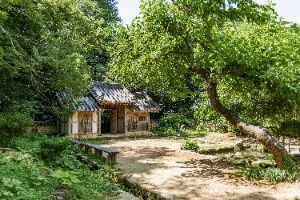
カンジンに位置するペクンドン別墅庭園は、秋に最も美しい場所であり、湖南の三大民間庭園の一つである。朝鮮中期の隠士イ・ダムロが造営し、隠棲した別荘庭園である。
このコースは1日旅程のサンプルです。そのまま保存するか、AI日程に拡張できます。
Wolchulsan, counted among the three great rocky mountains along with Seoraksan and Juwangsan in Cheongsong, spans north to Yeongam-gun and south to Gangjin-gun along its main ridge. Among the many valleys of Wolchulsan, the Geumneung Gyeongpodae valley in Wollam-ri, Seongjeon-myeon, Gangjin-gun is famous for its beauty. Named because the stream flowing from Cheonhwangbong and Gujeongbong on Wolchulsan looks like a long strip of unbleached cotton fabric, this valley has clear water winding between large and small rocks. Compared to other valleys on Wolchulsan, it generally has a gentle slope and cold water, making it perfect for summer retreats. The course from Gyeongpodae Exploration Support Center along the Gyeongpodae valley to Baramjae and then to Cheonhwangsa takes about 4 hours. Nearby, Seollok Tea Garden Gangjin, tea fields, and Baegundong Garden are also nice to visit.
According to the historical records of Muwisa, the first major reconstruction was carried out in 875 (Heon-gangwang 1) by Dosun Guksa, who founded it as Garoksa Temple. Shortly after, in 905 (Hyogongwang 9), Seongak Guksa Hyeongmi (864–917), a Seon master of the Gajisanmun lineage, stayed at Muwigapsa at the request of Goryeo's founder King Taejo Wang Geon, reconstructing the temple and widely spreading teachings gaining popular support. Thus, Muwisa was founded as Muwigapsa before the early 10th century when Hyeongmi resided there. However, the records state that in 946 (Jeongjong 1), Hyeongmi renamed the temple Moyoksa during a third reconstruction, but 946 was 30 years after Hyeongmi's death and the year the stele for the Goryeo State Muwigapsa Seongak Dae-sa Pyeon-gwang Yeong-tap was erected, making this unlikely. This is probably a later misunderstanding of Hyeongmi's major reconstruction with Wang Geon's support and his propagation of Buddhism. It is clear that Muwisa was founded before the early 10th century, reconstructed by Hyeongmi, and was a Seon temple of the Gajisanmun branch.
Gangjin Dawon is a tea plantation operated by 'Taepyeongyang Dawon,' a leader in Korea's tea production industry, covering an area of 33.3 hectares. The plantation features gentle curves and vibrant greenery, creating a perfect harmony with the towering rocks of Wolchulsan. Wolchulsan is known for its mountain range surrounded by large rocks resembling folding screens, and tea trees have been cultivated here since ancient times around various temples. The renowned scholar Dasan Jeong Yak-yong once praised the tea from Wolchulsan as the second best in the world. Each early May, the foothills of Wolchulsan are painted a dazzling blue-green. In May, Gangjin Dawon has become a tourist attraction not only for tea ceremony enthusiasts but also for general visitors. Guests can enjoy more than sightseeing and photography—they can indulge in the subtle aroma of tea and try a unique experience of picking green tea leaves. While the lush green tea fields are beautiful, the winter scenery of Dawon also offers a new perspective for appreciating the tea fields.
コース後に休みやすい宿を集めました
会員登録して自分のチャンネルも一緒に紹介してもらう
(会員になると、マイページで設定した Instagram・YouTube・ブログのリンクが、あなたのコメントと一緒に表示されます。)
“「弘大近くに滞在して、夜のカフェ巡りをしました。街の夜景も雰囲気も最高でした。」”
ゲストとして投稿したコメントには、SNSリンクやプロフィールカードは表示されません。
この場所についてのちょっとしたコツや感想をシェアしてください。
ゲストとして、気軽にひとことコメントを残すこともできます。
写真の添付はログイン後に利用できます。
まだレビューがありません。最初の感想を投稿してみましょう!


