
とても美しいビュー!ビュー!ビュー!素晴らしい展望だけを厳選したコース in インチョン広域市 江華郡 · schedule 日帰り · distance 약 50km · 3 stops · highlights チョンドゥンサ, Gimpo Munsusanseong Fortress, Gimpo…

民族の魂が宿るマニ山と歴史や伝説が絡む古刹、チョンドゥンサの近くには大型カフェも多い。キンポに渡れば車を降りて、北朝鮮からソウルのサムガク山まで見渡せるムンスサン城を散策しながら美しい風景を楽しめる。
このコースは1日旅程のサンプルです。そのまま保存するか、AI日程に拡張できます。
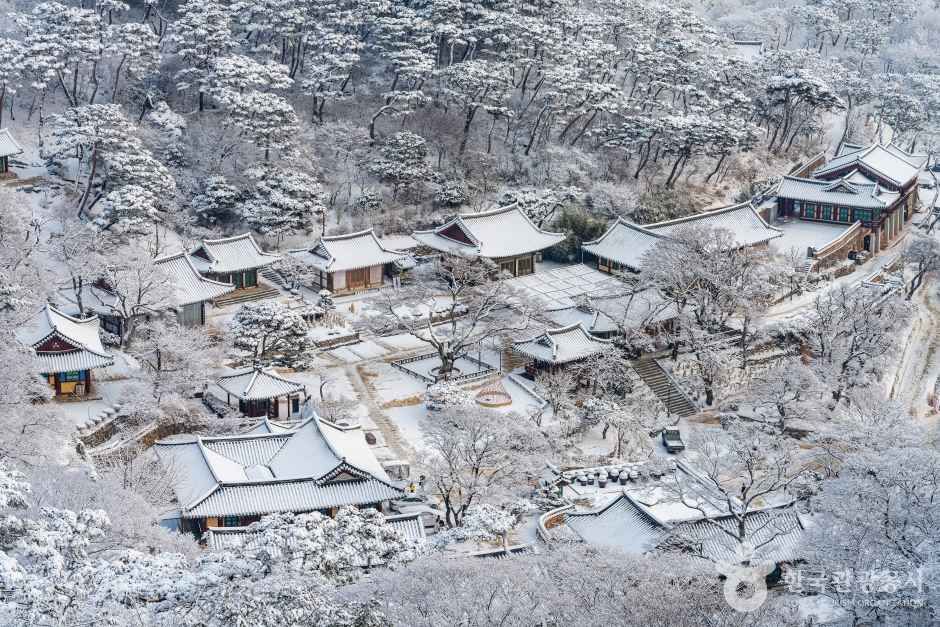
チョンドゥンサは現存する韓国の寺院の中で最も古い歴史を持ち、仏の加護により国を守った護国仏教の根本道場として歴史と権威を保持している寺院である。『世宗実録地理志』に記録されたように、サムラン城は檀君が三人の息子に築かせた古代の土城であり、三国時代にはその土城の上に石城が築かれ、現在まで続いている。チョンドゥンサの創建は西暦381年(高句麗の少肋王11年)と伝えられている。最初に創建したのは秦から渡来した阿道和尙で、彼は江華島を経て新羅に仏教を伝えたとされる。阿道和尙が江華島に滞在していた際、現在のチョンドゥンサの場所に寺を建て、その名を『真宗寺』とした。その後、高麗王室はサムラン城内に宮殿を建てた後、真宗寺を大規模に再建し、16年後の忠烈王の時代に王妃の正化宮主が経典と玉灯を寄進したことを契機に寺名を『チョンドゥンサ』に改めた。朝鮮の光海君の時代である1614年に火災で建物が全焼したが、チギョンス僧侶を中心に再建が始まり、1621年2月に旧姿を取り戻した。チョンドゥンサには大雄殿、薬師殿、梵鐘など韓国の宝物があり、朝鮮王朝実録を保管していた正足史庫が境内にある。また、東門側にはチョンドゥンサが護国仏教の発祥地であることを示す梁憲守勝戦碑がある。これは丙寅洋擾の際、戦略的要衝であったチョンドゥンサに侵入したフランス軍を撃退し国を救った梁憲守将軍の功績を記念して高宗10年(1873年)に建立された。体験プログラムとしては、当日型、体験型、休息型に分かれたテンプルステイが用意されている。当日型は短時間で韓国の仏教文化を体験できる内容で、体験型は季節や参加者の特性に応じて寺院ごとに異なるプログラムが行われる。休息型は寺に滞在し疲れた身体と心を休めることを目的としている。
Gimpo Munsusanseong Fortress is a Joseon Dynasty fortress that guarded the entrance to Ganghwa alongside Gapgojin, and was a fierce battleground during the French Campaign against Korea (Byeongin Yangyo). In 1866, when French forces led by Admiral Roze occupied Ganghwa Island, Han Seong-geun was appointed as the military governor of Sunmu to strengthen the defense of Munsusanseong Fortress in order to block the French army's inland advance. In October of the same year, when approximately 70 French soldiers crossed the sea, the Joseon forces at Munsusanseong killed three French soldiers and wounded two. However, due to inferior weaponry, they could not hold their position and retreated from Munsusanseong. After the retreat of the Joseon army, the French destroyed the south gate and fortress walls of Munsusanseong and burned about 30 civilian households before returning to Ganghwa. Although the Joseon army was defeated in this battle, its significance lies in the fact that it inflicted the first considerable damage on the French forces. Gimpo Munsusanseong was built as a stone fortress in 1694 and reconstructed in 1812. It was firmly constructed with well-cut stones and surrounded by yojang, defensive structures for hiding the defenders. At the time, the fortress had three gate towers (Chwi-yeru, Gonghaeru, and another) and three secret passage gates called ammun. Among them, Chwi-yeru was located on the coast facing Gapgojin and served as the land gate. Currently, the coastal fortress walls and gate towers have disappeared and been replaced by a village, with only the fortress walls connecting the ridges remaining.
Jangneung is the tomb of Wonjong, the biological father of the 16th Joseon king Injo (1623~1649), and his wife, Inheon Queen Gu. Jangneung is in the form of Ssangneung (paired tombs), with the burial mounds placed side by side in one enclosure. When facing the tomb from the front, the left (west) is Wonjong's tomb, and the right (east) is Inheon Queen's tomb. The scale and structure of the tomb appear to represent the typical style of mid-Joseon. Below the tomb is a ritual hall where memorial rites are performed; this building was used annually by the 21st king Yeongjo and the 22nd king Jeongjo to conduct ancestral rites. The area around the tomb is arranged like a park. (Source: Gimpo-si Culture and Tourism Homepage)
コース後に休みやすい宿を集めました
会員登録して自分のチャンネルも一緒に紹介してもらう
(会員になると、マイページで設定した Instagram・YouTube・ブログのリンクが、あなたのコメントと一緒に表示されます。)
“「弘大近くに滞在して、夜のカフェ巡りをしました。街の夜景も雰囲気も最高でした。」”
ゲストとして投稿したコメントには、SNSリンクやプロフィールカードは表示されません。
この場所についてのちょっとしたコツや感想をシェアしてください。
ゲストとして、気軽にひとことコメントを残すこともできます。
写真の添付はログイン後に利用できます。
まだレビューがありません。最初の感想を投稿してみましょう!



![Gimpo Jangneung [UNESCO World Heritage] 1](https://tong.visitkorea.or.kr/cms/resource/51/3361651_image2_1.jpg)
![Gimpo Jangneung [UNESCO World Heritage] 2](https://tong.visitkorea.or.kr/cms/resource/52/3361652_image2_1.jpg)
![Gimpo Jangneung [UNESCO World Heritage] 3](https://tong.visitkorea.or.kr/cms/resource/53/3361653_image2_1.jpg)
![Gimpo Jangneung [UNESCO World Heritage] 4](https://tong.visitkorea.or.kr/cms/resource/54/3361654_image2_1.jpg)


