興徳寺跡に印刷された世界最高の金属活字 in 忠清北道 清州市 · schedule その他 · distance 12.5km · 4 stops · highlights Yonghwasa Temple, 점심식사(청송통닭, 성안골돌솥밥집), Cheongju Yongdusaji Cheol…
清州市の興徳寺跡は『仏祖直指心体要節』を印刷した場所として知られている。1440年に印刷されたグーテンベルクの活字より63年も前に、世界最古の金属活字本がここで印刷された。清州市内中心部には国宝に指定された龍頭寺跡の鉄幢があり、幢柱と銘文が刻まれた幢が残っている。長い歴史を持つ上党山城も落ち着いて見学できる場所である。
このコースは1日旅程のサンプルです。そのまま保存するか、AI日程に拡張できます。
Yonghwasa Temple is a Unified Silla period temple located by the Musimcheon river in Cheongju. It was first built by Eunjung Seonsa during Queen Seondeok's reign and was destroyed by fire in the 6th year of King Injo of Joseon. It was rebuilt in the 18th year of King Yeongjo's reign (1752) by Byeokdam Seonsa and named Yonghwasa, which remains today. The temple grounds include wooden buildings such as Bogwangjeon, Myeongbujeon, Yonghwajeon, Tamjindang, Jeokmukdang, and Haewollu, as well as the Four Lion Dharma Wheel Pagoda containing Buddha’s relics, and the Saritap of Monk Hyobong. The Four Lion Dharma Wheel Pagoda is a rare ancient Ashoka-style stone pagoda in Korea, enshrining seven genuine relics. There are mountain hermitages including Dosolam, built in the 26th year of Goryeo’s King Taejo (943) by Dosol Seonsa, and Gwaneumam, built in the 7th year of King Sukjong of Joseon (1681) by Cheongan Seonsa. Inside Yonghwasa is the Seven Seated Stone Buddha, discovered in 1902 by order of Queen Sunbin Eom, the wife of King Gojong, and there is a story that Boguksa Temple from Sangdangsanseong was relocated here. Unlike typical temples, Yonghwasa is located in the city center and is accessible to everyone; it also offers templestay programs, making it a good place to stay for cleansing body and mind. In spring, a cherry blossom festival is held along the Musimcheon around the temple.
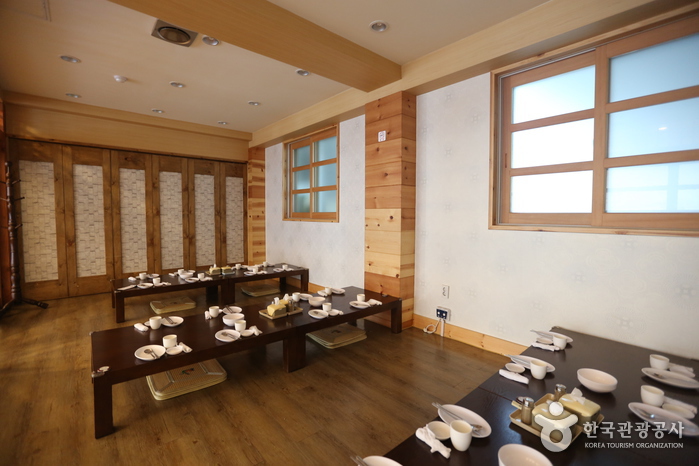
[청송통닭] 40년 전통의 삼계탕, 통닭 전문점이다. [성안골돌솥밥집] 영양돌솥밥으로 유명한 곳으로 1인용 개인 돌솥에 구수한 누룽지나 숭늉을 마실 수 있다.
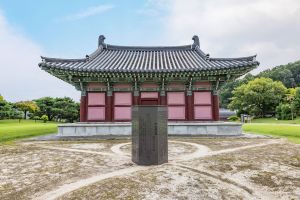
When there is an event at a temple, a flag called a dang is hung at the entrance, and the pole used to hang this flag is called a danggan. The two pillars supporting the danggan on both sides are called dangganjiju. Nammun-ro, Sangdang-gu, Cheongju-si, where the danggan stands, was once the site of a temple called Yongdusa. Yongdusa was founded in 962 (the 13th year of King Gwangjong of Goryeo) but was ruined due to frequent wars and rebellions toward the late Goryeo period. The site where the temple stood has now become the busiest street in downtown Cheongju. This danggan remains intact with its base stone and two supporting pillars, preserving its original form well. The two pillars have vertically carved lines in the center of their outer surfaces, adding variation to the plain surface. Between them, 20 cylindrical iron rings are stacked and interlocked from top to bottom to form the danggan, while the top of the stone pillars has a latch-like fixture securing the danggan firmly. Especially on the surface of the third iron ring, the motivation and process for erecting this iron danggan are recorded; originally, it is said to have consisted of 30 iron rings. The danggan was erected in the same year as the temple's founding, 962 (the 13th year of King Gwangjong), providing a precise date and thus holding significant value. Furthermore, since danggan remains are rare in Korean cultural heritage, this iron danggan, along with those at Gapsa Temple in Gongju and Chiljangsa Temple in Anseong, forms a rare example. Historically, Cheongju suffered many disasters caused by floods, and a fortune teller suggested that erecting a large mast would cause the area to resemble a boat, thus avoiding disasters. Accordingly, a danggan functioning as a mast was erected here, enabling the region to escape disasters. Since then, Cheongju has been called Juseong (Boat Fortress), as the story goes.
* A Three Kingdoms period shell-type stone fortress, Sangdang Fortress * The name Sangdang Fortress appears to originate from Sangdang-hyeon of the Baekje period in the Three Kingdoms era. It is a massive shell-type stone fortress exceeding 4km in circumference. The fortress is believed to have first been built as an earthen fortress during the Baekje period, and records suggest that Kim Seohyeon (Wonjeonggong), the third son of Kim Yushin, constructed Seowonsulseong here. Later, it was rebuilt during the Japanese invasions of 1592 (29th year of King Seonjo of Joseon) and converted to a stone fortress during King Sukjong’s reign. According to the Eupji (local gazette), the fortress was renovated with stonework in 1716 (42nd year of King Sukjong) based on the old site, with the names and official titles of those involved in construction inscribed on the southern gate and walls. The pavilion above the south gate was restored in 1977. * Structure and construction method of Sangdang Fortress * Covering an area of 12.6 hectares with a circumference of 4,400 meters, the fortress walls are vertical stone structures built with stones of varying sizes and reinforced inwardly with soil using the inner wedging technique (Naetak Gongbeop), standing 4.7 meters tall. The fortress has three gates on the east, west, and south sides. The south gate features a semicircular arch made of musaseok stone with a wooden pavilion on top. Currently, only the stone foundation remains, with the gate measuring 3.5m in height and 4.2m in width. The east and west gates also had pavilions, built squarely with musaseok stones measuring 2.7m tall and 2.8m wide. Near the east and south gates are one each of secret gates (Ammun), and a water outlet (Sugou) was located in the southeast, though it is now a reservoir. Inside the fortress remain the sites of the East and West Command Posts (Dongjangdae and Seojangdae). Sangdang Fortress is the most representative architectural symbol of Cheongju. Its walls resemble a belt tied around Sangdang Mountain and have protected the city in times of danger. The fortress walls stretch along the ridgeline about 4.2 km with a height of 4 to 5 meters. Partial repairs were made during the Japanese invasions and the stone fortress was rebuilt with square-cut granite in 1716. The compound once contained five ponds, three temples, government buildings, and warehouses. Currently, it features three gates: Goonammun (South Gate), Mihomun (West Gate), Jindongmun (East Gate), two secret gates, three bastions (Chiseong), and three water outlets. The Dongjangdae, where Joseon soldiers trained, was restored in 1992 to recreate its original appearance. After circling the fortress and descending, visitors can enjoy a traditional hanok village within the fortress grounds, where traditional liquors and bindaetteok (mung bean pancakes) provide refreshment after the walk. ※ A cultural tourism guide is stationed here and explanatory tours are available anytime. ◎ Travel tip encountering the charm of Korean Wave - The drama featured Sangdang Fortress as the place King Injo fled during the Qing invasion; it also served as a backdrop for Namhansanseong.
コース後に休みやすい宿を集めました
会員登録して自分のチャンネルも一緒に紹介してもらう
(会員になると、マイページで設定した Instagram・YouTube・ブログのリンクが、あなたのコメントと一緒に表示されます。)
“「弘大近くに滞在して、夜のカフェ巡りをしました。街の夜景も雰囲気も最高でした。」”
ゲストとして投稿したコメントには、SNSリンクやプロフィールカードは表示されません。
この場所についてのちょっとしたコツや感想をシェアしてください。
ゲストとして、気軽にひとことコメントを残すこともできます。
写真の添付はログイン後に利用できます。
まだレビューがありません。最初の感想を投稿してみましょう!