
チャンニョンを彩る原始自然と文化遺産との出会い in 慶尚南道 昌寧郡 · schedule その他 · distance 10.9km · 2 stops · highlights Changnyeong Seokbinggo, Changnyeong Jinyangha Clan Old House
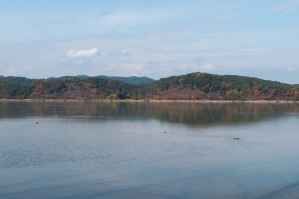
チャンニョンといえば、生きている自然史博物館であるウポ沼をまず思い浮かべる。しかし、伽耶時代から朝鮮時代に至る貴重な文化遺産を各地で見ることができる「屋根のない歴史博物館」でもある。ウポ沼と美しい文化遺産を巡った後、プゴク温泉で疲れを癒せばチャンニョンの旅は終わる。
このコースは1日旅程のサンプルです。そのまま保存するか、AI日程に拡張できます。
Seokbinggo is an ice storage warehouse showcasing the wisdom of ancestors who harvested ice in the cold winter and preserved it for use through the hot summer. According to a stele remaining on the right side of the ice reservoir, inscribed with '숭정기원후재임술이월초일일여사월초십일필,' it was constructed in 1742 by local governor Shin Seo and others. Based on its architectural style and the customs of storing ice, it is presumed to have been built during the Joseon Dynasty. Changnyeong Seokbinggo has almost entirely preserved its earth mound; externally, it looks like a massive ancient burial mound and is constructed north-south at a right angle to the stream flowing behind it. The entrance to the ice chamber is located on the south side, with large rectangular stones laid sideways on both sides to form the ceiling, which includes two ventilation holes connecting to the outside. The walls are made of rough stones but their surfaces have been chiseled flat to form smooth inner walls. This architectural style is identical to representative Seokbinggo such as those in Gyeongju and Andong, though Changnyeong Seokbinggo is somewhat smaller in scale.
This is a house from the Joseon Dynasty, said to have been built by Baekyeon, the 17th ancestor of Ha Byeongsu. There is a handwritten note in Sangdo-ri marking the 25th year of Geonryong, so it is estimated to have been built in 1760 (the 36th year of King Yeongjo's reign). It is a south-facing thatched house reflecting the Joseon-era house structure and folk architectural techniques, and served as the home of the Ha family for several generations. The house is a wooden one-story thatched structure in a line shape, with the first room on the right as the kitchen, followed by the main room, a spacious hall, and a guest room, each comprising one room, forming a four-room house with slight modifications. Behind the kitchen, a half-door was added to create a storage room, and instead of traditional elevated floors for southern houses, the front porch was omitted like a low-style house in a mountain valley. The porch floorboards are flat on top and natural wood underneath; the roof is covered with thatching grass without using nails. The rafters were joined through drilled holes. Unlike modern houses where kitchens are mostly located on the west side, here it is in the east. From the west, the layout is guest room, spacious hall, main room, and kitchen. The roof was woven upside down using a rolling pin without clay. As this is a private residence, visitors must observe the designated visiting hours.
コース後に休みやすい宿を集めました
会員登録して自分のチャンネルも一緒に紹介してもらう
(会員になると、マイページで設定した Instagram・YouTube・ブログのリンクが、あなたのコメントと一緒に表示されます。)
“「弘大近くに滞在して、夜のカフェ巡りをしました。街の夜景も雰囲気も最高でした。」”
ゲストとして投稿したコメントには、SNSリンクやプロフィールカードは表示されません。
この場所についてのちょっとしたコツや感想をシェアしてください。
ゲストとして、気軽にひとことコメントを残すこともできます。
写真の添付はログイン後に利用できます。
まだレビューがありません。最初の感想を投稿してみましょう!


