1500年前の伽耶時代の少女に会いに行く in 慶尚南道 昌寧郡 · schedule その他 · distance 38.6km · 4 stops · highlights Changnyeong Seokbinggo, Changnyeong Gyodong and Songhyeon-dong…

昌寧は伽耶と新羅の遺跡が残る文化遺産の地である。伽耶時代の古墳群として知られる校洞・松峴洞古墳群では人骨が発掘され、伽耶時代に殉葬された少女の姿が復元された。また、国宝に指定された新羅の真興王が建てた尺経碑や術亭里の三層石塔、朝鮮時代の石氷庫など、時代を超えた文化遺産に出会える。
このコースは1日旅程のサンプルです。そのまま保存するか、AI日程に拡張できます。
Seokbinggo is an ice storage warehouse showcasing the wisdom of ancestors who harvested ice in the cold winter and preserved it for use through the hot summer. According to a stele remaining on the right side of the ice reservoir, inscribed with '숭정기원후재임술이월초일일여사월초십일필,' it was constructed in 1742 by local governor Shin Seo and others. Based on its architectural style and the customs of storing ice, it is presumed to have been built during the Joseon Dynasty. Changnyeong Seokbinggo has almost entirely preserved its earth mound; externally, it looks like a massive ancient burial mound and is constructed north-south at a right angle to the stream flowing behind it. The entrance to the ice chamber is located on the south side, with large rectangular stones laid sideways on both sides to form the ceiling, which includes two ventilation holes connecting to the outside. The walls are made of rough stones but their surfaces have been chiseled flat to form smooth inner walls. This architectural style is identical to representative Seokbinggo such as those in Gyeongju and Andong, though Changnyeong Seokbinggo is somewhat smaller in scale.
The Changnyeong area was called Bulsaguk, one of the twelve countries of Jinhan mentioned in the Samguk Sagi, also known as Bisabeolguk. The Changnyeong Gyodong and Songhyeon-dong tumuli cluster refers to a large burial mound group distributed around Gyori and Songhyeon-ri below Mokma Fortress on the western foothills of Hwawangsan in Changnyeong-eup. It was first identified in 1911 by the Japanese scholar Sekino Tadashi. In Gyodong, tens of mounds of various sizes were gathered around a large mound called the royal tomb, but only eight remain today, and the preservation of the surviving mounds is imperfect. Partial excavations were conducted by the Japanese from 1918 to 1919, and it is said that large quantities of pottery and gold crafts corresponding to 20 chariots and two war chariots were unearthed, but except for some artifacts held by the National Museum of Korea and the Tokyo National Museum, these are unconfirmed. According to the investigation results, the large tumuli were horizontal stone chamber or horizontal pit-style tombs. Excavations of Songhyeon-dong tumuli nos. 6 and 7 began in 2002 by the Gyeongnam Cultural Heritage Research Institute and the National Gaya Cultural Heritage Research Institute, revealing over 280 pottery pieces and over 90 iron artifacts including ornaments, horse gear, weapons, and farming tools, as well as over 100 wooden artifacts, including the country’s first boat-shaped camphor coffin, gaining great academic attention. Confirmed artifacts include gilt-bronze crowns, gold and silver ornaments, silver crown decorations, gilt-bronze coronets, gold earrings, various horse gear, decorated weapons, scale armor and various iron weapons, U-shaped shovel blades and various farming tools, metal vessels, and various pottery and wooden objects from Gyodong and Songhyeon-dong tumuli. Most artifacts, including some pottery, closely resemble those found in Gyeongju, the capital of Silla, and based on the structure of the tumuli, the burial cluster is estimated to have been created in the early 5th to 6th century.
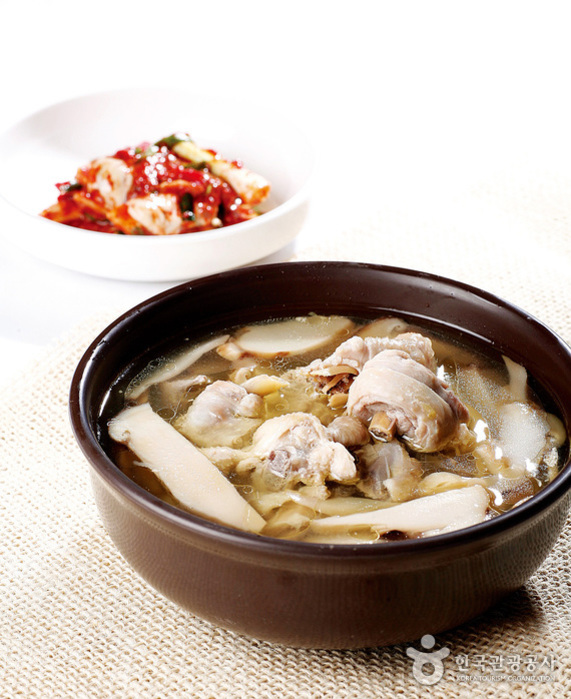
[옥천느티나무집] 경남의 화왕산은 몸에 좋은 송이버섯이 좋기로 상당히 유명한 곳이다. 그래서 그 입구엘 가보면 송이버섯을 주재료로 하는 식당들이 꽤 많은데 그중에 닭국으로 유명한 곳이 바로 이집이다. 결대로 찢어 놓은 담백한 닭고기와 향긋한 자연산 송이버섯에 속시원하게 풀어주는 국물 맛까지. 화왕산을 찾은 등산객에게 이만한 선물이 또 어디 있을까 싶다. 산을 벗 삼아 자연을 맛보는 특별한 방법 중에 하나일 것이다. [옥천관광농원식당] 옥천계곡에 위치하여 옥천의 생수로 토속요리를 한다. 75,000평의 송이버섯산을 가지고 있으며 송이를 넣어 만든 토종 닭백숙과 재래 된장이 이 집의 특미다. 송이철 이면 향이 독특한 송이요리는 일품으로 미식가들이 많이 찾는다.<
Gwallyongsa Temple, one of the eight major temples of the Unified Silla period, holds many cultural heritages and is also famous for its beautiful scenery. Legend says that Wonhyo and his disciple Songpa were praying here for one hundred days when suddenly they saw nine dragons rising from the pond to the sky, after which the temple was named 'Gwallyongsa' and the mountain was called Guryongsan. The Daeungjeon hall existed in the first year of King Taejong of Joseon (1401) but was destroyed during the Japanese invasions of Korea, rebuilt in the 9th year of King Gwanghaegun (1617), and repaired in the 25th year of King Yeongjo (1749) to its current state. Within Gwallyongsa are many Buddhist relics including the Daeungjeon, Yongseondae Stone Sakyamuni Buddha statue, Gwallyongsa Stone Buddha statue, Yaksa-jeon (all designated treasures), the three-story stone pagoda of Yaksa-jeon (a tangible cultural asset), and stupa.
コース後に休みやすい宿を集めました
会員登録して自分のチャンネルも一緒に紹介してもらう
(会員になると、マイページで設定した Instagram・YouTube・ブログのリンクが、あなたのコメントと一緒に表示されます。)
“「弘大近くに滞在して、夜のカフェ巡りをしました。街の夜景も雰囲気も最高でした。」”
ゲストとして投稿したコメントには、SNSリンクやプロフィールカードは表示されません。
この場所についてのちょっとしたコツや感想をシェアしてください。
ゲストとして、気軽にひとことコメントを残すこともできます。
ドラッグ&ドロップ、またはクリックして画像を追加(最大6枚)
まだレビューがありません。最初の感想を投稿してみましょう!