奉化の薬水観光地を巡る in 慶尚北道 奉化郡 · schedule その他 · distance 58.1km · 3 stops · highlights Bonghwa Bukjiri Seated Buddha Carving, Ojeon Mineral Spring, Bonghwa Dak…
慶尚北道北部に位置し、東は蔚珍郡、西は英州市、南は安東市と栄陽郡、北は江原道寧越郡、三陟市、太白市に接している。ここにある清らかな水の薬水コースを紹介する。
このコースは1日旅程のサンプルです。そのまま保存するか、AI日程に拡張できます。
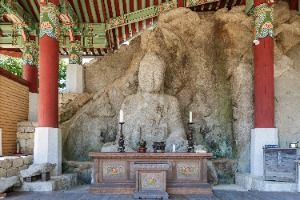
The Bonghwa Bukjiri Seated Buddha Carving is made by carving a large chamber-like space into a natural rock face to house the Buddha statue, in which a 4.3m tall Buddha image is prominently carved. The wide and large face is richly proportioned and wears a slight smile on the front, showing a vivid expression. The shoulders appear somewhat hunched but the figure is dignified, and the robe draped over both shoulders forms thick U-shaped folds across the chest and extends down the arms, covering the pedestal on which the statue sits. The hands are depicted with the right hand raised to the chest and the left hand resting on the knee, enhancing the solemn elegance of the statue. The aureole behind the Buddha is divided into the head aureole and body aureole, featuring small Buddhas sculpted in various places, with a delicate lotus pattern engraved at the center of the head aureole. Considering the softness of the face and body expressions, the statue is estimated to have been made in the late 7th century and together with the Yeongju Gahung-dong Triad Buddha Carving and Seated Buddha (Treasure) represents the Buddhist sculpture style of the Yeongju-Bonghwa area at that time, leaving a significant mark in the history of Silla Buddhist sculpture.
The natural village where Ojeon Mineral Spring is located is called Muljip Village. Ojeon Mineral Spring was discovered by a peddler during the Joseon Dynasty and was selected as the top mineral spring at the national mineral spring contest during the reign of Seongjong, the 9th king of the Joseon Dynasty. It is said that during the 11th king Jungjong's reign, Jusebung, the magistrate of Punggi-gun, often visited this spring, and four praise poems are said to have been passed down. The village where Ojeon Mineral Spring is located was formerly called Aejun, meaning mugwort field. The name originates from the fact that the spring water was effective for skin diseases, and leprosy patients drank and bathed in the mineral water, then used the local mugwort to apply and drink as treatment, curing their illnesses, hence the name Mugwort Field.
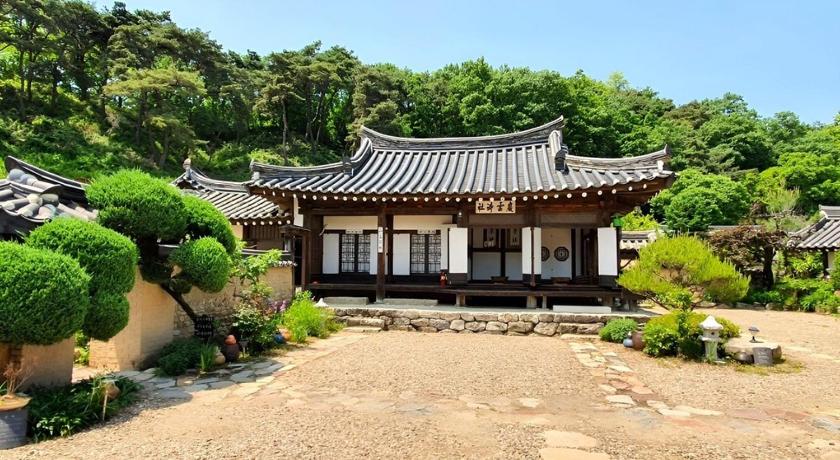
According to the theory of pungsu (geomancy), Daksil Village is named for its shape resembling a golden rooster sitting on its eggs, called Geumgye Poranhyeong. This place was where Chungjae lived in seclusion, and his descendants have formed a clan village for 500 years. Related treasures such as Cheongamjeong, Samgye Seowon, Chungjae Diary, Geunsarok, rare books, and old documents are preserved in the Chungjae Relics Museum. The surrounding mountains, dense pine forests, large rocks, and clean water make it an ideal spot for family outings. Mid-Joseon scholar Lee Jung-hwan praised it as one of Korea's top scenic spots in his book Taekriji. In Seokcheon Valley, there is Seokcheon Jeongsa, built by Chungjae Kwon Beol's eldest son Cheongam Kwon Dong-bo to commemorate his father's virtues. Climbing from Seokcheon Valley to Daksil Village, there are the remains of Chungjae Kwon Beol, and this area is designated as Historic and Scenic Site No. 3. (Source: Bonghwa County Office)
コース後に休みやすい宿を集めました
会員登録して自分のチャンネルも一緒に紹介してもらう
(会員になると、マイページで設定した Instagram・YouTube・ブログのリンクが、あなたのコメントと一緒に表示されます。)
“「弘大近くに滞在して、夜のカフェ巡りをしました。街の夜景も雰囲気も最高でした。」”
ゲストとして投稿したコメントには、SNSリンクやプロフィールカードは表示されません。
この場所についてのちょっとしたコツや感想をシェアしてください。
ゲストとして、気軽にひとことコメントを残すこともできます。
写真の添付はログイン後に利用できます。
まだレビューがありません。最初の感想を投稿してみましょう!