800年続く賑やかな仮面劇 in 慶尚北道 安東市 · schedule その他 · distance 105km · 6 stops · highlights Andong Hahoe Village [UNESCO World Heritage], 하회동 탈 박물관, Byeongsan Seow…

ハフェ別神儺仮面劇は、ハフェ村の人々が高麗時代から行ってきた仮面劇である。別神儺は「特別な儺」を意味し、村の安寧と豊作を祈願して5~10年に一度大きな儺の祭りを開催したことから名付けられた。ゆったりとした歩みでハフェ村を巡ると、土と石で整然と積まれた塀や迷路のように続く路地、親しみやすい茅葺き屋根、樹齢600年に達する三神木、川辺に位置する万松亭、崖の上から村を見渡せる扶容台など見どころが多い。
このコースは2日間の旅程サンプルです。そのまま保存するか、AI日程に拡張できます。
Hahoe Village is a typical clan village where the Pungsan Ryu (柳) family has lived for generations, embodying the beauty of traditional Korean houses. It is also the birthplace of prominent Joseon Dynasty Confucian scholars Gyeomam Ryu Un-ryong and Seoae Ryu Seong-ryong. On April 21, 1999, Queen Elizabeth II of the United Kingdom visited on her third day in Korea, making it even more famous as a place of Korean tradition. The name Hahoe (河回) originates from the Nakdong River flowing eastward in an S-shape, surrounding the village. To the east is Hwasan, a branch of the Taebaek Mountains, whose ridges extend to the village forming low hills. Houses are arranged facing lower ground around the hills, resulting in their orientations varying in all directions (east, west, south, and north). At the village center stand large tile-roofed houses of the Ryu family, surrounded by well-preserved thatched-roof houses. The Nakdong River flows leisurely in front of the village, with the strikingly steep Buyongdae cliff, an endless white sandy beach, and dense pine forests creating a magnificent landscape. In front of Buyongdae, the waterway opens again, allowing the use of ferries. Hahoe Village offers the Hahoe Byeolsingut Talnori mask dance as a permanent performance and holds the annual Andong International Mask Dance Festival every autumn. Nearby attractions include Bongjeongsa Temple, Gosan Seowon Academy, Gwiraejeong Pavilion, Gye-myung Mountain Natural Recreation Forest, Hakga Mountain Natural Recreation Forest, and Waryongsan Mountain, offering various sights. Notably, on July 31, 2010, Andong Hahoe Village and Gyeongju Yangdong Village were inscribed as 'Historic Villages of Korea' on the UNESCO World Cultural Heritage list. With their inclusion, Korea's world heritage sites number ten, following Seokguram and Bulguksa, Haeinsa Janggyeong Panjeon, Jongmyo Shrine (1995), Changdeokgung Palace, Suwon Hwaseong Fortress (1997), Gyeongju Historic Areas, Gochang, Hwasun, and Ganghwa Dolmen sites (2000), Jeju Volcanic Island and Lava Tubes (2007), and Joseon Royal Tombs (2009). Representative local foods in Hahoe include Andong soju, Heotjesatbap (a banquet-style rice dish emerging from the many renowned seowon academies), Andong salted mackerel, and Andong noodles. ◎ Travel Information to Experience the Charm of Hallyu - In the drama , numerous sparks approach while sliding down a rope from a 64m cliff. Egg-shaped fires float gently down the river, and with the shout 'Nakhwa!', large fireworks cascade like a waterfall below the cliff. The Korean-style fire festival Seonyu Julbulnori is a grand purification ritual embodying the wishes of those gathered. Gusanyeong, determined to live by her own will and not for anyone else, smiles brightly amid the starlit hopes at a moment of visual peril.
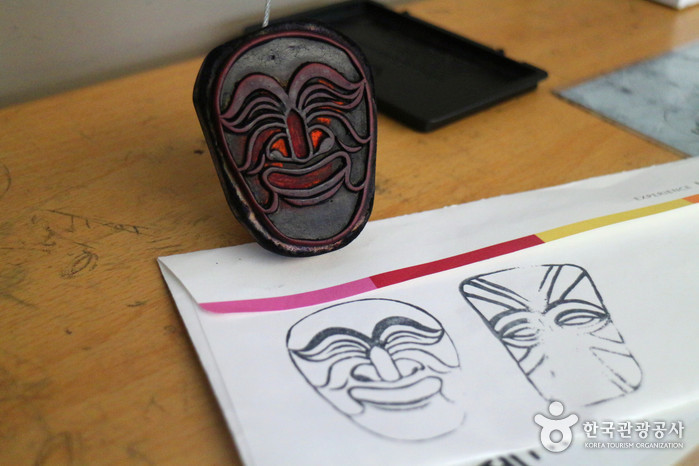
하회동 탈 박물관은 중요민속자료 제122호인 안동하회마을에 위치하고 있다. 하회마을은 우리나라의 대표적인 전통. 민속마을이며 국보 제121호인 하회탈과 중요무형문화재 제69호인 하회별신굿탈놀이의 본 고장이기도 하다. 하회동 탈 박물관에는 하회탈 뿐만 아니라 우리나라의 모든 탈들을 한 자리에서 일목요연하게 볼 수 있도록 전시되어 있으며, 나아가 세계 각국의 중요한 탈들을 수집하여 한국탈과 비교하여 볼 수 있도록 전시하였다.
Byeongsan Seowon originated from Pungak Seodang (豊岳書堂), an educational institution in Pungsan, Andong dating back to the mid-Goryeo period. It was a place where local Confucian scholars gathered to study. During the late Goryeo period, when King Gongmin traveled through Pungsan amidst the Hong Geon-jeok rebellion, he was deeply moved to see the students devoted to learning despite the turmoil and generously gave many books and a grant of land to encourage them. After 200 years, as more houses and roads appeared nearby causing noise, the scholars sought a new location. Seoae Ryu Seong-ryong, after the death of his father and while residing in Hahoe, recommended Byeongsan as the best site. Following his advice, in 1575 (8th year of King Seonjo), the Seodang was relocated and renamed Byeongsan Seowon. In 1614 (6th year of King Gwanghae), disciples including Ubok Jeong Gyeong-se, Changseok Lee Jun, Dongni Kim Yun-an, and Jeongbong An Dam-su built Jondeoksa to commemorate Seoae's scholarship and virtue, enshrining his spirit tablet. The spirit tablet was moved in 1620 (12th year of Gwanghae) to Yeogang Seowon (dedicated to Toegye Yi Hwang), but was returned to Byeongsan in 1629 (7th year of King Injo). There were debates over whether to enshrine Seoae's tablet in both Yeogang and Byeongsan Seowons or in only one, but following the precedent of Zhu Xi, it was deemed acceptable to honor it in two seowons in the same area. In 1662 (3rd year of King Hyeonjong), the spirit tablet of Seoae’s third son, Suam Ryu Jin (1582–1635), was also enshrined. Byeongsan Seowon played a vital role in local education and produced many scholars. It was one of the 47 seowons that survived the 1868 order by Heungseon Daewongun to abolish seowons. (Source: Byeongsan Seowon website)
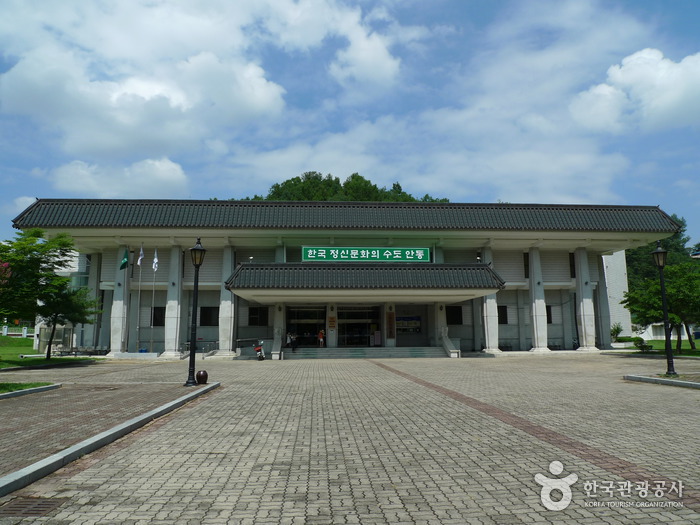
안동민속박물관은 총 171,630㎡의 부지에 옥내박물관과 야외박물관으로 이루어져 있다. 옥내 박물관에는 안동지방 문화의 특징인 유교문화, 특히 관혼상제를 중점적으로 전시하고, 아울러 이 지방 특유의 민속놀이를 모형전시하고 있다. 영상관람을 위하여 시청각실과 영상실도 갖추고 있다. 야외박물관에는 보물인 석빙고를 비롯하여 안동댐 건설시 수몰지역에 산재하던 전통 고가옥 등 20여점의 중요 생활문화 자료들을 이건 전시하고 있다. 안동문화권의 민속문화를 조사·연구·보존·전시함으로써 국민의 사회교육의 장과 시민의 휴식공간으로 제공되며 올바른 지방문화의 이해를 돕고자 건립된 공공시설이다.
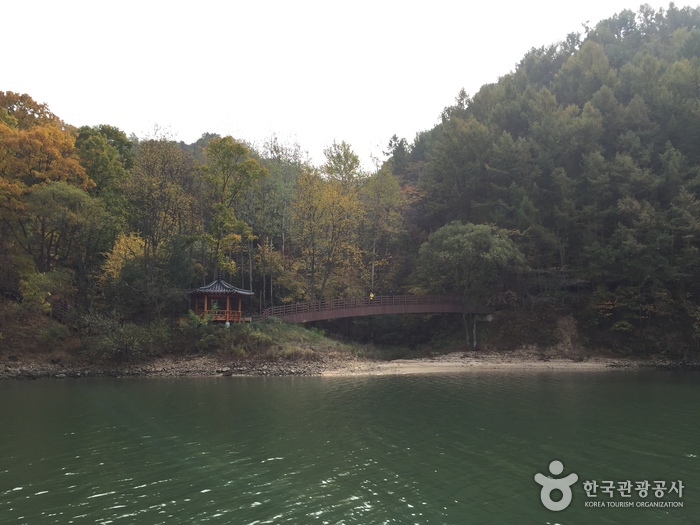
낚시터와 휴양지로 인기 좋은 곳, 안동호는 낙동강 최상류를 막아 4대강 개발 계획의 일환으로 만들어진 호수이다. 안동댐의 크기는 댐높이 83m, 길이 612m로 소양강 댐에 이어 두 번째로 크다. 안동호 주변의 자연 경관이 수려하며, 선착장이 있어 유람선을 이용할 수 있고 낚시터로도 유명하다. 안동호와 역조정지 등은 경치가 뛰어나서 호반 관광 명소로 이름이 높다. 안동댐 주변에는 도산서원·안동 석빙고 등의 문화재가 있고, 안동민속촌·안동민속박물관·드라마 「태조 왕건」 촬영장 등 볼거리가 다양하다. 보조 댐 근처에는 안동댐을 조성하면서 수몰된 지역의 민속 문화재들을 그대로 옮겨와 야외 박물관으로 꾸민 민속 경관지도 있다.
With a history spanning over 500 years, Imcheonggak is the birthplace of Seokju Lee Sang-ryong, who served as the first Prime Minister of the Provisional Government of the Republic of Korea, established the Shinheung Military Academy to prepare the armed independence struggle, and personally practiced noblesse oblige. Seokju, the family head, established a militia base as the country became endangered, took the first step in the independence movement, and led the national enlightenment movement by embracing Western political and scientific civilization. The independence movement led by the people of Imcheonggak was exceptional and solemn. They organized Gyeonghaksa to stabilize the compatriot community and established Shinheung Military Academy to cultivate talented individuals. When funds ran out in Manchuria and it became hard to survive day by day, Seokju planned to sell Imcheonggak. Several sales contracts were written, but as conditions were not favorable, the clan provided partial funding. Imcheonggak is also the oldest existing traditional house in Korea, originally settled by Lee Jeung (1368–1429), the sixth son of Lee Won (a prime minister during King Sejong's reign), who was captivated by the beauty of this place, becoming the clan progenitor. Lee Myeong, his third son and a minister during King Jungjong’s reign, built the house. Imcheonggak is a traditional Korean house built on a terraced foundation using the sloped hills of Yeongnam Mountain. Known as a tiled-roof house with 99 rooms, it is a typical upper-class Joseon Dynasty residence with an anchae (main quarters), jungchae (intermediate quarters), sarangchae (men's quarters), shrine, haengnangchae (servants' quarters), byeolchae (detached quarters), and a small byeoldang (Gunja-jeong pavilion) and garden. (Source: Imcheonggak official website)
コース後に休みやすい宿を集めました
会員登録して自分のチャンネルも一緒に紹介してもらう
(会員になると、マイページで設定した Instagram・YouTube・ブログのリンクが、あなたのコメントと一緒に表示されます。)
“「弘大近くに滞在して、夜のカフェ巡りをしました。街の夜景も雰囲気も最高でした。」”
ゲストとして投稿したコメントには、SNSリンクやプロフィールカードは表示されません。
この場所についてのちょっとしたコツや感想をシェアしてください。
ゲストとして、気軽にひとことコメントを残すこともできます。
写真の添付はログイン後に利用できます。
まだレビューがありません。最初の感想を投稿してみましょう!
![Andong Hahoe Village [UNESCO World Heritage] 1](https://tong.visitkorea.or.kr/cms/resource/32/3542032_image2_1.jpg)
![Andong Hahoe Village [UNESCO World Heritage] 2](https://tong.visitkorea.or.kr/cms/resource/34/3542034_image2_1.jpg)
![Andong Hahoe Village [UNESCO World Heritage] 3](https://tong.visitkorea.or.kr/cms/resource/64/4059764_image2_1.jpg)
![Andong Hahoe Village [UNESCO World Heritage] 4](https://tong.visitkorea.or.kr/cms/resource/65/4059765_image2_1.jpg)
![Byeongsan Seowon [UNESCO World Heritage] 1](https://tong.visitkorea.or.kr/cms/resource/51/3575951_image2_1.jpg)
![Byeongsan Seowon [UNESCO World Heritage] 2](https://tong.visitkorea.or.kr/cms/resource/52/3575952_image2_1.jpg)
![Byeongsan Seowon [UNESCO World Heritage] 3](https://tong.visitkorea.or.kr/cms/resource/53/3575953_image2_1.jpg)
![Byeongsan Seowon [UNESCO World Heritage] 4](https://tong.visitkorea.or.kr/cms/resource/54/3575954_image2_1.jpg)