
韓国独立運動の聖地!安東、安東独立運動史51年を歩む in 慶尚北道 安東市 · schedule その他 · distance 41.3km · 3 stops · highlights Andong Imcheonggak, Takcheongjeong Jongga, 퇴계종택
国を愛し民族を愛した精神を学べる場所である。1926年の六十万歳運動の総企画者である権五設先生の記念碑、朝鮮共産党初代責任書記の金在鳳、書間島独立軍基地の開拓者であり大韓民国臨時政府初代国務領の石柱李相龍、崇高な殉国志士の香山李万道、抗日民族抵抗詩人の李陸史などの歴史的遺跡を訪ねることができる教育コースである。
このコースは1日旅程のサンプルです。そのまま保存するか、AI日程に拡張できます。
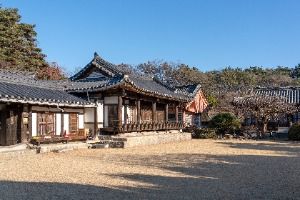
With a history spanning over 500 years, Imcheonggak is the birthplace of Seokju Lee Sang-ryong, who served as the first Prime Minister of the Provisional Government of the Republic of Korea, established the Shinheung Military Academy to prepare the armed independence struggle, and personally practiced noblesse oblige. Seokju, the family head, established a militia base as the country became endangered, took the first step in the independence movement, and led the national enlightenment movement by embracing Western political and scientific civilization. The independence movement led by the people of Imcheonggak was exceptional and solemn. They organized Gyeonghaksa to stabilize the compatriot community and established Shinheung Military Academy to cultivate talented individuals. When funds ran out in Manchuria and it became hard to survive day by day, Seokju planned to sell Imcheonggak. Several sales contracts were written, but as conditions were not favorable, the clan provided partial funding. Imcheonggak is also the oldest existing traditional house in Korea, originally settled by Lee Jeung (1368–1429), the sixth son of Lee Won (a prime minister during King Sejong's reign), who was captivated by the beauty of this place, becoming the clan progenitor. Lee Myeong, his third son and a minister during King Jungjong’s reign, built the house. Imcheonggak is a traditional Korean house built on a terraced foundation using the sloped hills of Yeongnam Mountain. Known as a tiled-roof house with 99 rooms, it is a typical upper-class Joseon Dynasty residence with an anchae (main quarters), jungchae (intermediate quarters), sarangchae (men's quarters), shrine, haengnangchae (servants' quarters), byeolchae (detached quarters), and a small byeoldang (Gunja-jeong pavilion) and garden. (Source: Imcheonggak official website)
Takcheongjeong Jongga was built in 1541 (the 36th year of King Jungjong) by Kim Su of Takcheongjeong and was rebuilt after a fire in the late Joseon period. It is considered the most beautiful private pavilion attached to a house. The structure is a hipped-and-gabled roof building with seven kan at the front and two kan on the side, featuring a signboard by the famous calligrapher Han Seokbong. Kim Su was the second son of Nong-su Kim Hyo-ro, the founding ancestor of the Gwangsan Kim clan in Yean, known for both literary and military skills, and authored the medical book "Suwun Japbang." Originally located near the Nakdong River, it was relocated in 1974 due to the Andong Dam reservoir to its current site in Gunjamaeul, 'Ocheon-ri Historic Site.' Gunjamaeul, formed about 500-600 years ago when Nong-su Kim Hyo-ro settled there, is named after the saying by Han River Jeong Gu, a magistrate of Andong, "In the village of Ocheon, there is not a single person who is not a gentleman." The village produced many scholars continuously since the early Joseon period. About 20 original traditional houses including Takcheongjeong and the clan house Hujodang of the Gwangsan Kim clan, and the old house of Kim Yu, the author of "Suwun Japbang," are well preserved. Also, clan-held ancient documents (Treasure), clan-held printed books (Treasure), and Hujodang artifacts (Gyeongsangbuk-do Tangible Cultural Property) are preserved. The artifact exhibition hall Sunggwangak displays hundreds of heirlooms, ancient documents, and books. Hujodang also operates traditional house experiences such as Hanok stay.
이 건물은 퇴계 선생의 영손 동암(東巖)공이 한서암 남쪽에 지은 가옥이다. 대를 이어 살아오다 1715년(肅宗 41)에는 추월한수정(秋月寒水亭)을 건축하여 면모를 일신한 바 있으나, 10대사손 고계(古溪)공대에 구택의 동남쪽 건너편에 새로 집을 지어 옮겨 살았다. 그러나 1907년 왜병의 방화로 두 곳 종택이 다 불타버렸고, 지금의 집은 1926년∼1929년 사이에 13대사손 하정(霞汀)공이 이곳에 세거하던 임씨(任氏)들의 종택을 매입하여 이건하였으며 추월한수정은 옛 건물처럼 재건하였다. 원래의 가옥은 없어졌으며, 지금의 가옥은 퇴계의 13대 후손인 하정공(霞汀公) 이충호가 1926~1929년에 새로 지은 것이다.
会員登録して自分のチャンネルも一緒に紹介してもらう
(会員になると、マイページで設定した Instagram・YouTube・ブログのリンクが、あなたのコメントと一緒に表示されます。)
“「弘大近くに滞在して、夜のカフェ巡りをしました。街の夜景も雰囲気も最高でした。」”
ゲストとして投稿したコメントには、SNSリンクやプロフィールカードは表示されません。
この場所についてのちょっとしたコツや感想をシェアしてください。
ゲストとして、気軽にひとことコメントを残すこともできます。
写真の添付はログイン後に利用できます。
まだレビューがありません。最初の感想を投稿してみましょう!


