
安東湖に沿って退渓先生に会いに行こう in 慶尚北道 安東市 · schedule その他 · distance 45.3km · 4 stops · highlights Andong Beopheungsaji Seven-Story Brick Pagoda, Yeonmisa, Bongjeon…

安東は両班の故郷であり、儒教の精神的中心地である。退渓李滉先生の足跡が残る陶山書院だけでなく、退渓先生の胎室や宗宅もあり、彼の生涯を垣間見ることができる。安東市内には臨時政府初代国務領を務めた石舟李相龍先生の生家である臨淸閣や、近くに残る韓国最高の前塔である法興寺址七層前塔もあり、安東で必ず訪れるべき場所である。
このコースは1日旅程のサンプルです。そのまま保存するか、AI日程に拡張できます。
The Andong Beopheungsaji Seven-Story Brick Pagoda is the largest and oldest seven-story brick pagoda from the Unified Silla period in Korea, standing 17m tall with a base 7.5m in size. The area is called Beopheung-ri, suggesting it was built at Beopheungsa Temple (法興寺) from the Unified Silla era. The pagoda was reconstructed in 1487 (18th year of King Seongjong's reign). The base is a single story with a square floor plan, currently featuring eight Buddhist guardian deity (Palbujung) or Four Heavenly Kings (Sacheonwang) reliefs on granite panels, six on each side, and a central staircase on the south side. The style of these sculptures shows differences in production dates and disorderly arrangement. The upper surface of the base is slanted and rounded with cement, leaving doubt about how much of the original form is preserved, as it is unusual for so many carvings to be arranged on a single-tier base's side. The pagoda body is built by overlapping dark grey bricks about 28cm long, 14cm wide, and 6cm thick in a staggered manner. The first-story body is very tall, with a small granite shrine room (gamshil) bordered on the lower southern middle side. The interior narrows spindle-shaped upward, with a square hole 48cm wide at the top (appearing as a pillar hole, chaljugong). The second story is about one-quarter the height of the first, and the rate of height reduction for the third story and above is mild, giving the seven-story structure overall stability. The roof stones (okgaeseok) display the pagoda's unique form, with stepped eaves that are horizontal; their width is significantly reduced compared to stone pagodas. The number of underlying supports decreases from 9 to 3 from the first to the higher stories, and the number of stepped layers on top ranges from 12 to 5, gradually tapering upward. A small part of the drainage slope seems to have been tiled. There was likely a wooden pagoda first, with this brick pagoda modeled after it. Only the exposed platform remains of the upper finial now, but records from Yeonggaji mention a "Beopheungsa Brick Pagoda" located "5 ri east of the prefecture," presumed to be this pagoda. Historical descriptions noting a gilt bronze finial suggest the original finial was made of gilded bronze.
Yeonmisa is a branch temple of Gounsa, the head temple of the Jogye Order of Korean Buddhism, located on Odosan Mountain in Icheon-dong, Andong-si, Gyeongsangbuk-do. It originated when Myeongdeok, one of the disciples of the Goguryeo monk Bodeok (普德), carved a Buddha statue on a rock and enshrined it, calling it Yeongusa initially. Later, because the roof covering the Buddha statue resembled a swallow, it was called Yeonjalu, and since the monks' living quarters corresponded to the swallow's tail and the main hall to its beak, it was named Yeonmisa. The name Yeonmisa is also said to derive from Yeonbiwon, a resting lodging for travelers from the Yeongnam region to Hanyang during the Joseon Dynasty, commonly called Jebiwon. The treasure of Yeonmisa, the Icheon-dong Stone Buddha, is famous as the symbolic face of Andong with its calm smile. This stone Buddha, commonly called Jebiwon Mireukbul, stands as a precious remaining Buddha of Yeonmisa's long history and is one of the few representative Mireuk Buddha statues in Korean Buddhist history. Moreover, this statue appears in Seongjupuri, a representative folk song, linking it to a folk faith cherished by the people over many years. Although Yeonmisa is a very small temple, the artistic and ethnic heritage value embodied by the Mireuk Buddha is outstanding.
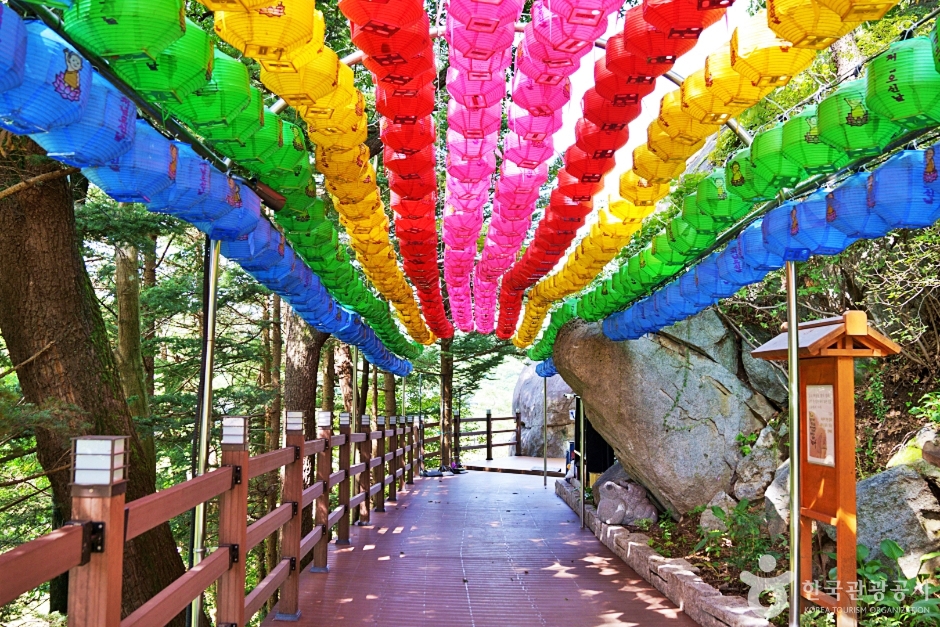
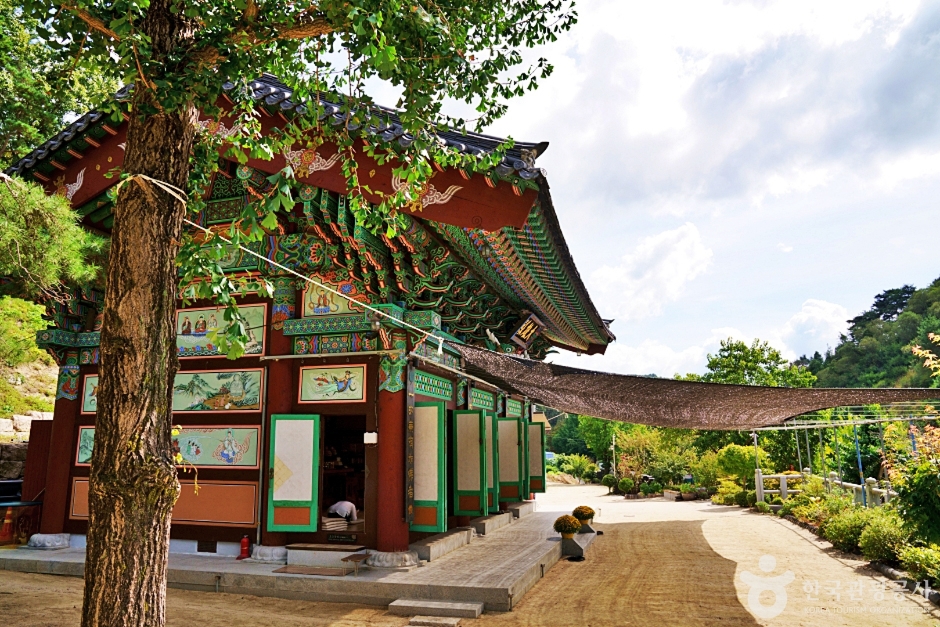
Cheondeungsan Bongjeongsa Temple is a good place not far or difficult to reach from where we live, allowing a brief escape from the busy city to enjoy peaceful leisure. It has the oldest wooden buildings in Korea and is a source of pride for all of us. Anyone visiting Bongjeongsa can forget all mental and physical fatigue and breathe in fresh air while hiking. It also continues the tradition of Korean mountain Buddhism, serving as a good training place. Bongjeongsa was founded in the 12th year of King Munmu’s reign in Silla (672) by Neungin, a disciple of Uisang Daesa. Cheondeungsan was originally called Daemangsan, but when Neungin was meditating in a rock cave there, a heavenly fairy impressed by his spiritual power lowered a lantern from the sky to brightly illuminate the cave, hence the name Cheondeungsan and the cave called Cheondeunggul. Later, Neungin, performing spiritual feats, folded a paper phoenix and flew it, stayed here, and opened the temple gate. Named Bongjeongsa, using the characters for phoenix (봉鳳) and stay (정停). The temple has been repaired six times since its founding and includes National Treasure No. 15 Geungnakjeon, National Treasure No. 311 Daeungjeon, Treasure No. 1614 rear mural, Treasure No. 1620 wooden seated statue of Avalokitesvara, Treasure No. 448 Hwaeomgangdang, Treasure No. 449 Gogeumdang, Deokhwiru, Muryanghaehoe, Samseonggak, a three-story stone pagoda, and subsidiary hermitages Yeongsanam, Jijoam, and Jungam. It is a beautiful temple visited by King Taejo and King Gongmin of Goryeo. (Source: Bongjeongsa)
Dosan Seowon is largely divided into Dosan Seodang and Dosan Seowon, which encompasses it. Dosan Seodang was where Toegye himself lived and taught his disciples, and Dosan Seowon is the shrine and seowon established after Toegye's death. Dosan Seodang was built in 1561 (16th year of King Myeongjong) when Toegye retired to his hometown to study and nurture future scholars; it is the oldest building within the seowon and is said to have been designed by Toegye himself. At that time, Nongunjeongsa, a dormitory for students, and Hago Jiksa, a facility within Bujeonggyodang, were also built. Dosan Seowon was completed in 1576 (9th year of King Seonjo), six years after Toegye's passing. In 1572, it was decided to enshrine Toegye's memorial tablet in Sangdeoksa. Two years later, local Confucian scholars built the shrine to enshrine the tablet and completed the seowon by building Jeongyodang and east and west study halls. In 1575 (8th year of King Seonjo), Dosan Seowon received a royal plaque written by Han Seok-bong, becoming a royal-granted seowon and thus served as the main center of Yeongnam Confucianism. In 1615 (7th year of King Gwanghae), the Sarim scholars enshrined Jo Mok as an auxiliary ancestral spirit. In 1792 (16th year of King Jeongjo), King Jeongjo ordered rites and implemented Dosan Byeolgwa. In 1796 (20th year of King Jeongjo), the Sisa Dan was established. In 1819 (19th year of King Sunjo), Donggwangmyeongsil, a library, was built. It was exempted from the 1870 seowon abolition order by Daewongun. In 1930, Seogwangmyeongsil was rebuilt, and in 1932, Hago Jiksa was relocated. In 1969, the seowon core along with 19 parcels of forest and farmland (324,945㎡) was designated a historic site. From 1970, restoration and expansion projects were carried out under presidential decree, sanctifying it as the spiritual home of Korean Confucian thought. In 1977, the Dosan Seowon Management Office was established, and management and operation ordinances were enacted and promulgated, continuing to the present day. ◎ Travel info to enjoy the charm of the Korean Wave - This is the location where the 16th season cast members of the entertainment show , wearing hanbok, were randomly paired with partners. Each time partners were assigned by their clothing color regardless of their will, viewers felt vicarious excitement and tension. Walking along the nearby trail, you can experience not only the inside of the seodang but also various famous sights of the seowon such as the king willow and Sisa Dan.
会員登録して自分のチャンネルも一緒に紹介してもらう
(会員になると、マイページで設定した Instagram・YouTube・ブログのリンクが、あなたのコメントと一緒に表示されます。)
“「弘大近くに滞在して、夜のカフェ巡りをしました。街の夜景も雰囲気も最高でした。」”
ゲストとして投稿したコメントには、SNSリンクやプロフィールカードは表示されません。
この場所についてのちょっとしたコツや感想をシェアしてください。
ゲストとして、気軽にひとことコメントを残すこともできます。
写真の添付はログイン後に利用できます。
まだレビューがありません。最初の感想を投稿してみましょう!


![Bongjeongsa Temple [UNESCO World Heritage] 1](https://tong.visitkorea.or.kr/cms/resource/94/3585194_image2_1.jpg)
![Bongjeongsa Temple [UNESCO World Heritage] 2](https://tong.visitkorea.or.kr/cms/resource/95/3585195_image2_1.jpg)
![Bongjeongsa Temple [UNESCO World Heritage] 3](https://tong.visitkorea.or.kr/cms/resource/97/3585197_image2_1.jpg)
![Bongjeongsa Temple [UNESCO World Heritage] 4](https://tong.visitkorea.or.kr/cms/resource/98/3585198_image2_1.jpg)
![Dosan Seowon [UNESCO World Heritage] 1](https://tong.visitkorea.or.kr/cms/resource/70/3422970_image2_1.png)
![Dosan Seowon [UNESCO World Heritage] 2](https://tong.visitkorea.or.kr/cms/resource/72/3422972_image2_1.png)
![Dosan Seowon [UNESCO World Heritage] 3](https://tong.visitkorea.or.kr/cms/resource/73/3422973_image2_1.png)
![Dosan Seowon [UNESCO World Heritage] 4](https://tong.visitkorea.or.kr/cms/resource/71/3422971_image2_1.png)